

Quick answer
The best way to keep a Reiki self-treatment practice going is to make it simple, realistic, and repeatable. A daily or near-daily 10–15 minute practice is often more sustainable than waiting for the perfect time to do a longer session. The goal is not perfection. The goal is consistency, gentleness, and reconnecting with Reiki in a way that fits real life.
Why is it so hard to stay consistent with Reiki self-treatment?
Many Reiki students begin with good intentions, but daily life often interrupts practice. People get busy. They feel tired. They become distracted. Emotional stress builds. Work and family responsibilities take over. And sometimes even students who truly value Reiki find themselves drifting away from a regular self-treatment rhythm.
This is a very common experience.
One reason it happens is that people often think of self-treatment as something that requires a perfect environment, a long period of quiet time, or a full formal routine. When that ideal setting does not appear, practice gets postponed. Over time, postponing becomes drifting.
Another reason is emotional pressure. People start thinking they should be doing more, should be more disciplined, or should be farther along in their practice. That kind of guilt can actually make it harder to return.
Does a Reiki self-treatment practice have to be long to be effective?
No. A Reiki self-treatment practice does not have to be long to be meaningful.
For many students, 10 to 15 minutes of focused, sincere self-treatment can be enough to reconnect with Reiki, calm the nervous system, support emotional balance, and help them feel more grounded.
What matters most is not whether the session is long. What matters most is whether the practice becomes part of the rhythm of life.
A small practice you can sustain is often far more supportive than a larger plan you keep postponing.
What gets in the way of regular Reiki self-treatment?
There are a few common barriers that often interrupt Reiki practice.
Distractions are a major one. Phones, schedules, noise, multitasking, and mental overload can all make it difficult to settle.
Fatigue is another. Many people think they need to feel highly focused or energized before they practice, when in reality Reiki can be especially supportive when they feel tired or worn down.
All-or-nothing thinking also causes problems. A student may believe that if they cannot do a full self-treatment, there is no point doing anything. That mindset can turn a flexible healing practice into something unnecessarily difficult.
Finally, guilt and self-criticism can create emotional resistance. Instead of simply beginning again, people judge themselves for having drifted.
What is the best way to restart a Reiki self-treatment practice?
The best way to restart is to make the return very easy.
Choose one time of day that is already part of your routine. This might be early morning, before sleep, after a shower, after meditation, or during a short quiet break.
Then choose a simple commitment:
10 to 15 minutes once a day,
or 10 to 15 minutes three times a week.
Keep it realistic.
A realistic practice is far more likely to become a lasting one.
It can also help to reduce friction. Put your phone away. Sit in the same place each time. Set a timer if needed. Let the practice begin before your mind starts negotiating with it too much.
How can Reiki students make self-treatment feel more natural?
Reiki becomes easier to keep up with when it feels less like another task and more like a way of returning to yourself.
That means shifting from pressure to relationship.
Instead of asking, “How can I be more perfect with my practice?” it may be more helpful to ask, “What would make it easier for me to receive Reiki regularly?”
That question often leads to kinder and more sustainable choices.
Self-treatment can become more natural when you connect it to something you already value: rest, prayer, reflection, emotional support, or simply creating a quiet moment in your day. It does not have to feel separate from life. It can become part of how you move through life.
What if you keep drifting from your Reiki practice?
If you keep drifting, it does not mean Reiki is no longer important to you. It usually means you need a more supportive structure.
You may need a shorter time commitment.
You may need fewer expectations.
You may need community support.
You may need to reconnect with why Reiki matters to you personally.
Sometimes joining a Reiki Share, replying to a teacher, or recommitting with others can make the difference. Practice often becomes easier when it is supported by relationship rather than isolated effort.
A simple Reiki self-treatment rhythm to try this week
If you would like a place to begin, try this:
Choose one 10 to 15 minute period each day or three times this week.
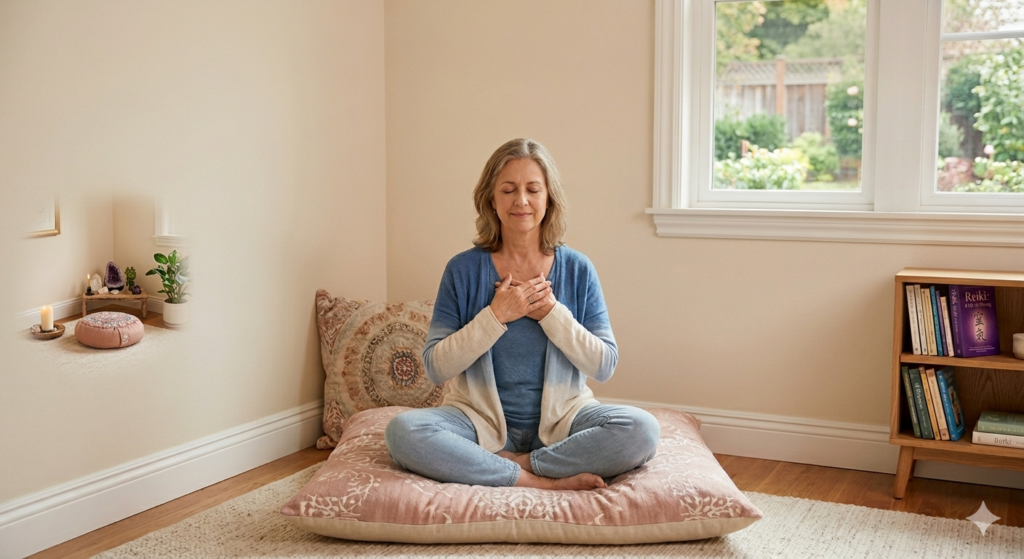
Place your hands on yourself with intention.
Breathe slowly.
Allow Reiki to flow.
Let the session be enough just as it is.
You do not need to perform.
You do not need to force.
You only need to begin again.
Final reflection
If you have taken Reiki I & II and have drifted from your self-treatment practice, you are not alone. Many sincere students experience this.
The answer is usually not to demand more from yourself. It is to make the practice simpler, kinder, and more realistic so it can become part of your life again.
A steady 10 to 15 minute rhythm may be all you need to reconnect.
If this speaks to you, I invite you to reply to this post or contact me and share what self-treatment practice you are committing to this week.
You are also welcome to join a Reiki Share.
And if your practice is naturally deepening and you feel ready for the next step, this may also be a beautiful time to explore Reiki Master training, mentorship, Crystal Classes, or Animal Reiki classes.
Frequently Asked Questions
How long should Reiki self-treatment be?
For many people, 10 to 15 minutes is enough to create a meaningful and sustainable rhythm.
What if I cannot practice every day?
That is okay. Choose a rhythm you can realistically keep, such as three times per week.
Does missing practice mean I am failing?
No. It means you are human. The important thing is to begin again gently.
A realistic commitment, less pressure, fewer distractions, and a clear reason for practicing can all help.