
One of the most common questions people ask when they first begin learning about Animal Reiki is whether the animal has to stay still in order to receive. It is such an understandable question because many people are unconsciously comparing Animal Reiki to a traditional human Reiki session. They imagine quiet stillness, a predictable flow, and a recipient who remains in one place throughout the experience. But animals are not people, and Animal Reiki is not about asking animals to adapt themselves to a human healing structure. One of the most beautiful lessons in this work is learning that animals can receive Reiki in motion, in stillness, at a distance, nearby, briefly, or over time. Healing does not depend on forced stillness. It depends on respectful connection.
Do animals have to stay still to receive Reiki?
No, they do not. Animals can receive Reiki while moving, resting, observing, stepping away, returning, or simply being nearby. Stillness is not required for healing. In Animal Reiki, the focus is not on controlling the animal’s behavior, but on honoring the animal’s comfort, rhythm, consent, and natural way of engaging with the energy.
This understanding changes everything.
When we first begin offering Reiki to animals, many of us are still carrying hidden assumptions about what a session should look like. We may think the animal should lie down, settle quickly, remain close, or somehow show us obvious signs that the Reiki is being received. If that does not happen, the inexperienced practitioner may wonder whether anything meaningful is occurring. But Animal Reiki gently teaches us to step out of those assumptions. The animal is not doing the session wrong by moving. The animal is not failing by stepping away. The animal is not resisting simply because it does not remain frozen in one place. In many cases, the movement itself is part of the receiving.
Can animals receive Reiki while moving?
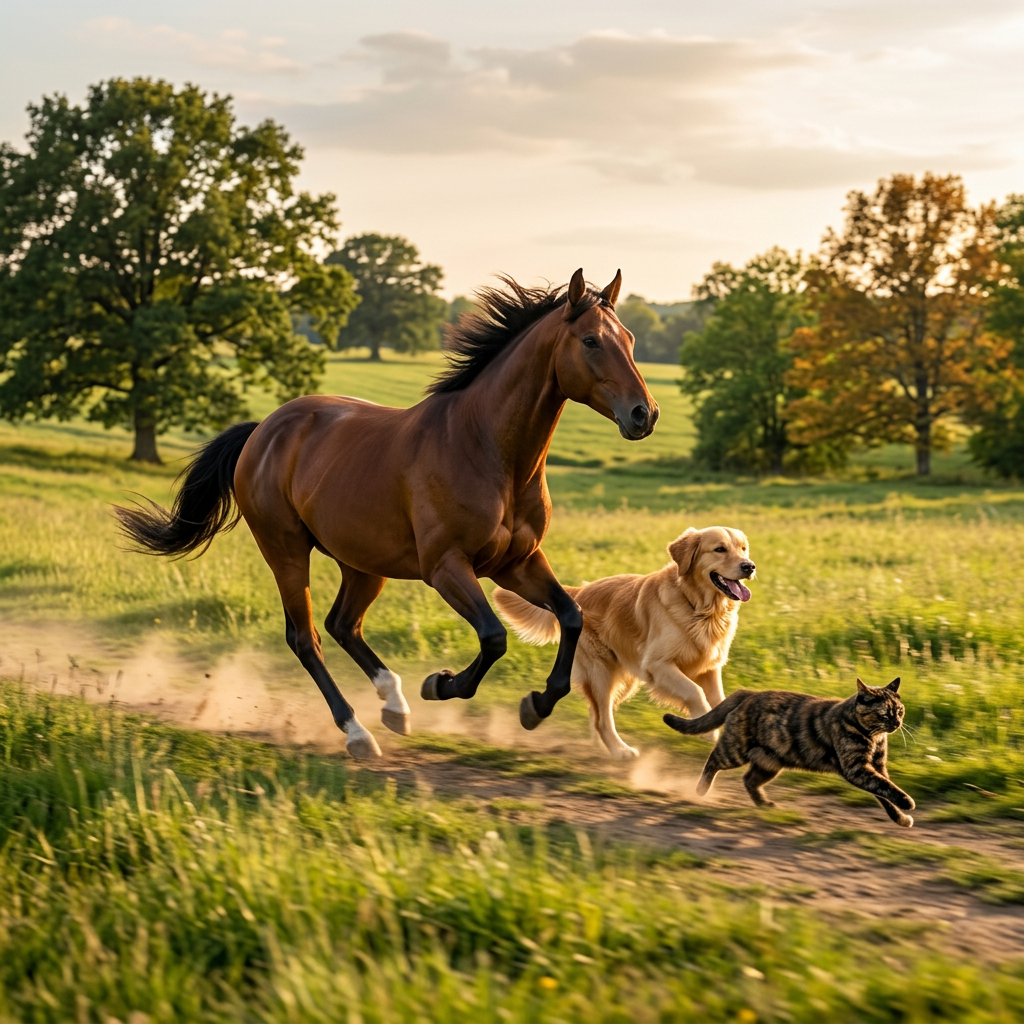
Yes. Animals often engage with Reiki in a way that reflects their natural wisdom. They may come close for a few moments and then move away. They may pause, observe, then return. They may rest across the room rather than directly beside the practitioner. They may shift their position several times before settling. They may take in the energy in small, manageable portions. None of this means the Reiki is absent. It may mean the animal is regulating its experience in a deeply intelligent and instinctive way.
That is one of the great invitations of Animal Reiki. It asks the practitioner to stop imposing and start observing.
This can be deeply freeing. It removes the pressure to create a perfect-looking session. It also helps us understand that healing is not always visible in the ways we expect. Sometimes the signs are subtle. A softening in the eyes. A deeper breath. A release of tension. A willingness to remain nearby. A calmer state afterward. A gentle shift in behavior over time. These things may be much more important than whether the animal held still for several minutes.
What are signs an animal is receiving Reiki?
One of the most helpful shifts in Animal Reiki is learning to recognize that stillness is not the only sign of receiving. Animals may show their response through softening, changes in breathing, increased relaxation, curiosity, choosing to remain close, moving in and out of the space, or appearing calmer after the session.
In fact, the expectation of stillness can sometimes interfere with the spirit of Animal Reiki. If we become too attached to the animal being quiet, close, or compliant, we may unknowingly move out of true listening and into control. Animal Reiki is not meant to be controlling. It is meant to be consent-based, respectful, and responsive to the animal’s choices. This is part of what makes it such a beautiful and ethical path.
Why is consent important in Animal Reiki?
Consent is a powerful part of this teaching. Animals deserve the freedom to move, approach, retreat, pause, and choose their own level of engagement. When that freedom is honored, the healing space becomes safer and more authentic. The animal does not have to defend its boundaries as much because those boundaries are already being respected. That creates trust. And trust is part of the healing field too.
This is why movement should not automatically be interpreted as rejection. A horse that steps forward and backward may be adjusting to the energetic experience. A dog that circles and then lies down elsewhere may still be participating fully. A cat that watches from across the room may be receiving in a quiet and deliberate way. Animals often teach us that closeness is not the only measure of connection. Presence can happen across space. Reiki can be received without physical contact. And healing can unfold without human control.
How does this teaching change the practitioner?
There is also something deeply humbling in this for the practitioner. Animal Reiki invites us to let go of performance. It asks us to trust Reiki without constantly seeking visible confirmation. It asks us to become more intuitive, more patient, and more willing to release our own agenda. That is one of the reasons Animal Reiki can be so transformative, not only for the animals, but for the humans who practice it.
Many students discover that this lesson extends far beyond animal sessions. As they learn not to force stillness, not to control the outcome, and not to measure healing by rigid external signs, they begin to change internally too. They become calmer. They become more observant. They become more respectful of timing, readiness, and consent in all areas of healing work. Animal Reiki becomes a teacher of humility.
There is something spiritually beautiful about that. Animals often lead us back to a more honest form of presence. They remind us that healing is relational, not mechanical. It cannot always be organized according to human expectations. Sometimes it must be entered with reverence and trust. Sometimes the most meaningful thing we can do is simply create a safe, open field and allow the animal to show us how they wish to meet it.
This perspective can be especially reassuring for people who love animals deeply but worry that they are not doing it right. If the animal moves, the session is not ruined. If the animal walks away and later returns, that is not failure. If the animal never comes directly into contact, that does not mean nothing happened. Animal Reiki asks us to widen our understanding of what receiving can look like.
And that widened understanding is one of the great gifts of the practice.
It teaches us that healing is not dependent on stillness. It is dependent on willingness, openness, and relationship. It teaches us that respect is more important than control. It teaches us that the animal’s choices matter. And it teaches us that Reiki is often working in ways that are quieter, gentler, and more collaborative than we first imagined.
So do animals have to stay still to receive Reiki?
No, they do not.
They simply need the freedom to engage in the way that is right for them.
When we understand that, we stop trying to make Animal Reiki look a certain way. We stop asking the animal to conform to our expectations. We begin listening more deeply. We begin trusting more fully. And in that space, something very beautiful becomes possible.
Not only healing for the animal, but transformation for the practitioner as well.
No. Animals can receive Reiki while moving, resting, observing, or stepping away. Stillness is not required.
Yes. Animals may receive Reiki from nearby or at a distance, depending on what feels comfortable and natural for them.
Signs may include softening, changes in breathing, relaxation, curiosity, remaining nearby, moving in and out of the space, or appearing calmer afterward.
Animal Reiki emphasizes consent because animals deserve choice, freedom, and respect within the healing space. This creates safety and trust.
No. Movement is often part of how the animal engages with the healing process.