

A crystal usually enters our life long after its first story began. By the time we hold it, the stone may have been mined, cut, polished, transported, sold, gifted, inherited, or discovered in a collection. We meet it at one point in a much longer journey.
That history can be easy to forget. We may focus on color, shape, mineral type, clarity, or the experience we have while holding the crystal. Those things can be meaningful, but relationship can deepen when we also remember a simpler truth: this stone came from the Earth. That awareness changes the posture of practice. Instead of beginning with, “What can this crystal do for me?” we can begin with gratitude.
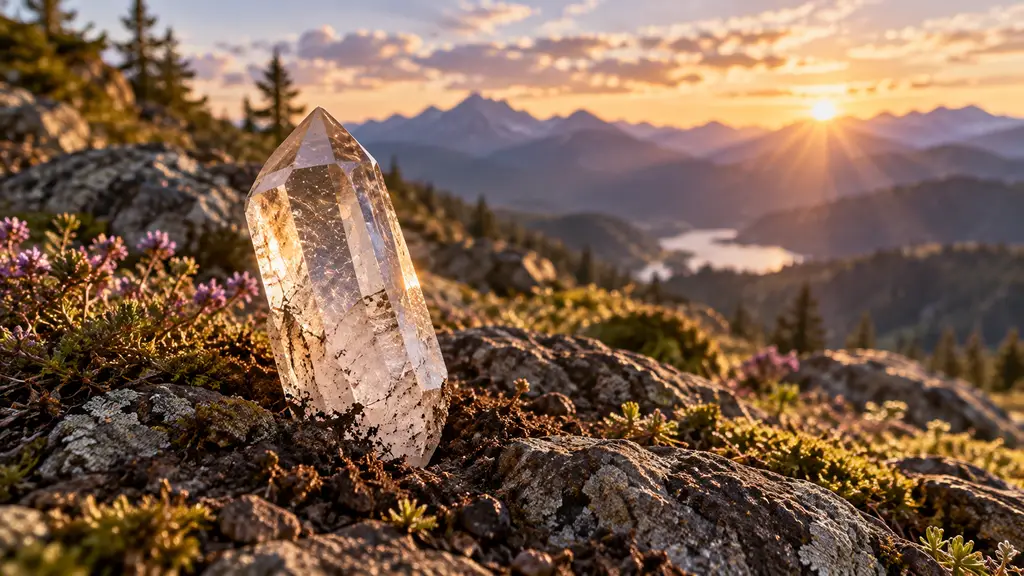
A Crystal Has a Physical Origin Before It Has a Spiritual Meaning
Every crystal has a geological origin. The exact location may be known, partially known, or completely unknown to us. A stone may be associated with a particular mine, mountain, country, or region, or we may simply know that it came through a shop or teacher.
Knowing the physical origin does not tell us what the crystal means spiritually. But it gives us context. It reminds us that the crystal existed long before our relationship with it began and that our experience is only one part of its story. This can help move crystal practice away from possession and toward stewardship.
The Lineage of Gratitude in Crystal Practice
One of the source threads in my crystal-healing lineage comes from Laurelle Shanti Gaia, whose teaching included a gratitude practice that reconnects Reiki practitioners with the Earth and a crystal’s place of origin. That idea has remained meaningful to me.
The practice is not valuable because it proves a metaphysical claim. It is valuable because gratitude changes how we approach relationship. We can hold a crystal and remember the mountain, earth, soil, pressure, time, people, and movement through which it eventually reached us. We can acknowledge that we are receiving something with a history.
Reiki Can Become an Invitation to Remember
Reiki can support this practice without turning it into a performance. Hold the crystal comfortably and become aware of Reiki. Notice the physical stone first: its weight, temperature, texture, edges, color, and transparency or opacity.
Then allow the idea of origin to enter the practice. Where might this stone have come from? If you know the location, remember it. If you do not know, you do not need to invent one. You can simply recognize that the stone came from somewhere in the Earth and let gratitude begin there.
You Do Not Need to Know the Exact Birthplace
Sometimes people assume that not knowing a crystal’s origin means the practice is less meaningful. I do not think that is necessary. Accurate provenance can be valuable, especially for ethical sourcing, geological interest, and historical context. But spiritual relationship does not require pretending to know what we do not know.
If the exact birthplace is unknown, say so. Then practice with what is true. “This crystal came from the Earth. I do not know the exact place. I can still meet it with gratitude.” That honesty is part of discernment.
Gratitude Before Programming
Crystal practice can easily become very task-oriented. We may clear, charge, or program a crystal, assign an intention, and place it into a layout. Those practices may have a place within someone’s tradition, but I encourage students to notice what happens if relationship comes before instruction.
Before asking the crystal to hold an intention, pause. Before deciding what it is for, notice it. Before directing, receive. Gratitude can create that pause. It reminds us that the crystal is not simply another tool waiting to be told what to do. In Illumine teaching, the relationship matters.
From Object to Relationship
The difference between object and relationship is subtle but important. An object is primarily evaluated by usefulness. A relationship includes attention, history, reciprocity, and change. This does not mean we have to make absolute claims about crystal consciousness. It means we can practice in a way that is less extractive.
We can ask: How do I care for this stone? What does it remind me of? What changes in me when I slow down enough to notice it? How does gratitude affect the way I use it in Reiki practice? These questions deepen experience without demanding metaphysical certainty.
Earth Relationship and Reiki
Crystal practice can also become a doorway into a broader relationship with the Earth. When we remember that a crystal came from a real place, we may become more curious about geology, sourcing, mining, land, and stewardship. That curiosity can be spiritual and practical at the same time.
We can honor the Earth without romanticizing every part of the supply chain. We can appreciate beauty while also asking responsible questions about where materials come from. Reiki does not require us to ignore those realities. Presence can include gratitude and responsibility together.
Avoid Forcing a Message From the Stone
A gratitude practice can be quiet. You may hold the crystal and feel warmth. You may notice a memory. You may experience nothing dramatic. The goal is not to receive a message simply because you made space. If something arises, notice it. If nothing arises, gratitude can still be complete.
This is one of the practices I want students to carry into intuitive crystal work: experience before interpretation. We do not need to fill silence with meaning. We can let relationship deepen through repeated attention.
A Simple Crystal Gratitude Practice
Choose one crystal. Sit comfortably. Bring Reiki into your own hands and awareness. Notice the physical stone before asking anything of it. If you know where the crystal came from, bring that place gently to mind. If you do not know, acknowledge the Earth as its origin without inventing details.
Then offer gratitude. You might say silently: “Thank you for the journey that brought you here.” Or use your own words. Let the gratitude remain simple.
Then become receptive. Notice your breath. Notice your body. Notice any memory, image, emotion, or thought that arises. Do not force an interpretation. After a few minutes, close the practice in whatever way feels natural to you. You may write down what you noticed. You may simply place the crystal back where it belongs.
Teaching This Without Prescribing Experience
Teachers need to be especially careful not to tell students what they should feel. One student may experience a strong emotional connection. Another may become interested in the geology. Another may feel peaceful. Another may feel nothing unusual. All of those experiences can belong in the classroom.
The teacher can present the seed. The student cultivates the flower. We can offer a gratitude practice and then let students discover what relationship means for them. The goal is not to make every student agree with our metaphysical worldview. It is to create a practice spacious enough for genuine experience.
Remembering Origin Can Change How We Hold the Crystal
The next time you pick up a familiar stone, try beginning somewhere different. Before asking what it means, remember that it came from the Earth. Before asking what it can do, notice what it already is. Before giving it a task, offer gratitude.
That small shift can change the quality of the encounter. The crystal becomes more than an item in a collection. It becomes part of a relationship with place, time, Earth, and practice.
Origin can provide physical, geological, historical, and ethical context. In spiritual practice, remembering origin can also support gratitude and relationship without determining what the crystal must mean.
You do not need to invent an origin. You can acknowledge that the exact location is unknown and still practice gratitude for the stone’s relationship with the Earth.
No. The gratitude and relationship practices described here are spiritual and experiential. They should not be presented as scientific proof of crystal consciousness.
You can follow the care practices appropriate to your tradition, but Illumine teaching encourages presence and relationship before automatically adding technique
Yes. Reiki can support your own presence, receptivity, and gratitude while you sit with the crystal.